

The Martian
What a windstorm on Earth taught me about being alone on Mars
This is the first in a series about science fiction films that get the science right — and why it matters.
I was waking up from a nap when I heard it. That sound of wind that feels wrong — too fast, too consistent. It reminded me of the Santa Ana winds in Los Angeles. I’d been out all day in the Black Rock Desert sun building our camp and had finally stolen an hour of sleep. Then my tent started shaking.
I quickly grabbed my boots and goggles. Something wasn’t right. And we were unprepared.
Outside, visibility had dropped. The Black Rock Desert is one of the most hostile environments in North America — a dried lakebed in the Nevada basin where temperatures spike past 100 degrees and the alkaline dust gets into everything. In terms of heat, dust, and desolation, it’s about as close to Mars as most of us will get.
Our shade structure — the thing keeping twenty people from overheating — was starting to collapse. People were still in their tents under it. Someone I couldn’t quite see in the dust yelled: “Everyone out of your tents and into the shipping container. NOW.”
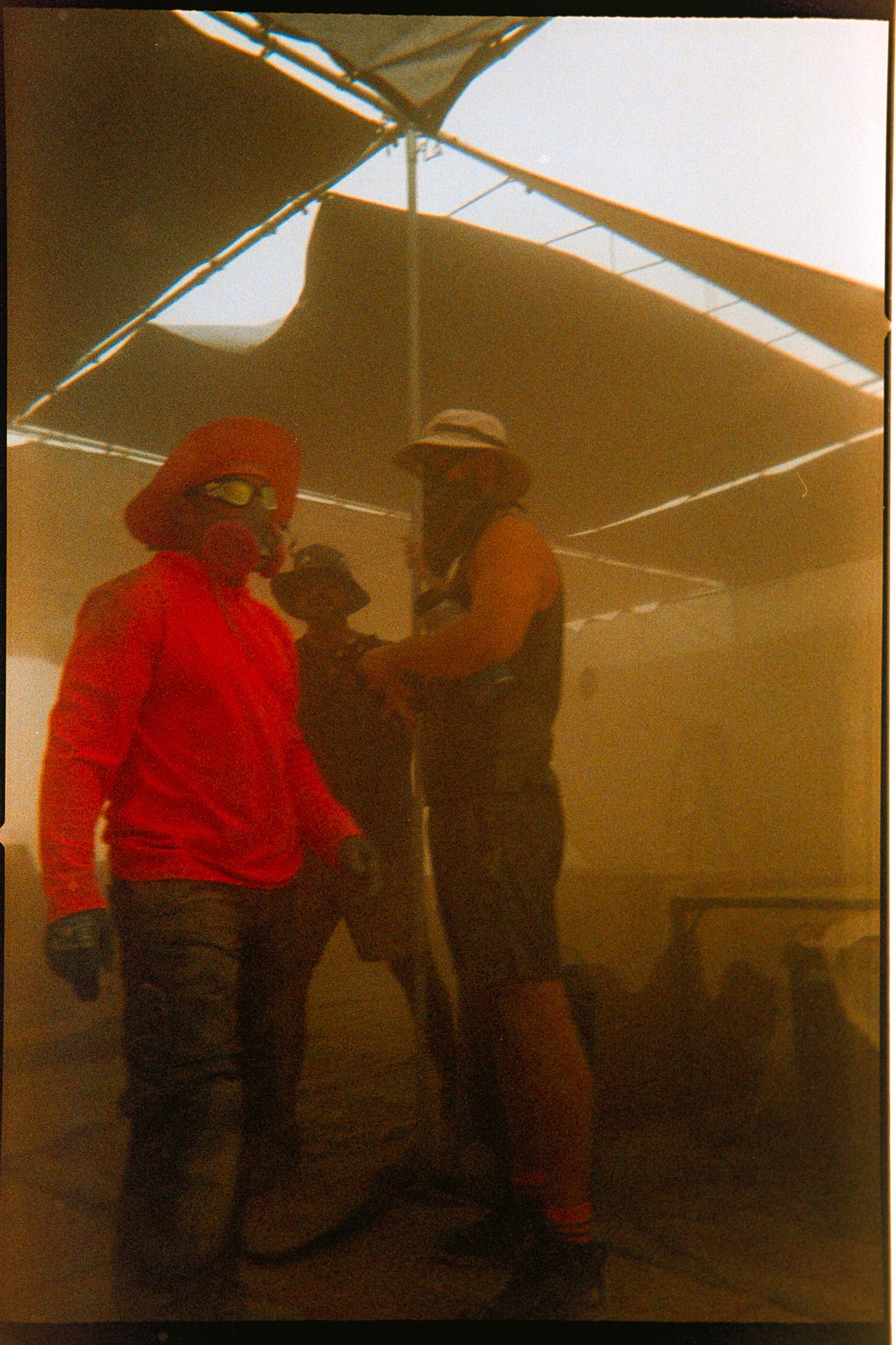
It took us most of the night to rebuild. Eight hours, twenty people in an adrenaline-induced flow, always knowing what needed to be done next. By the time we finished, the structure was reinforced and beers had been opened. The kind of relief you only get after something could have gone much worse.
Now imagine waking up to a storm like that. Alone. On Mars.
The Martian opens with that scenario. A catastrophic storm forces astronaut Mark Watney's crew to evacuate — leaving him behind, presumed dead. When he regains consciousness, the math of his situation is incomprehensible. Communications are down. The next rescue is four years away, minimum. He has food for maybe 300 days. He is 140 million miles from Earth.
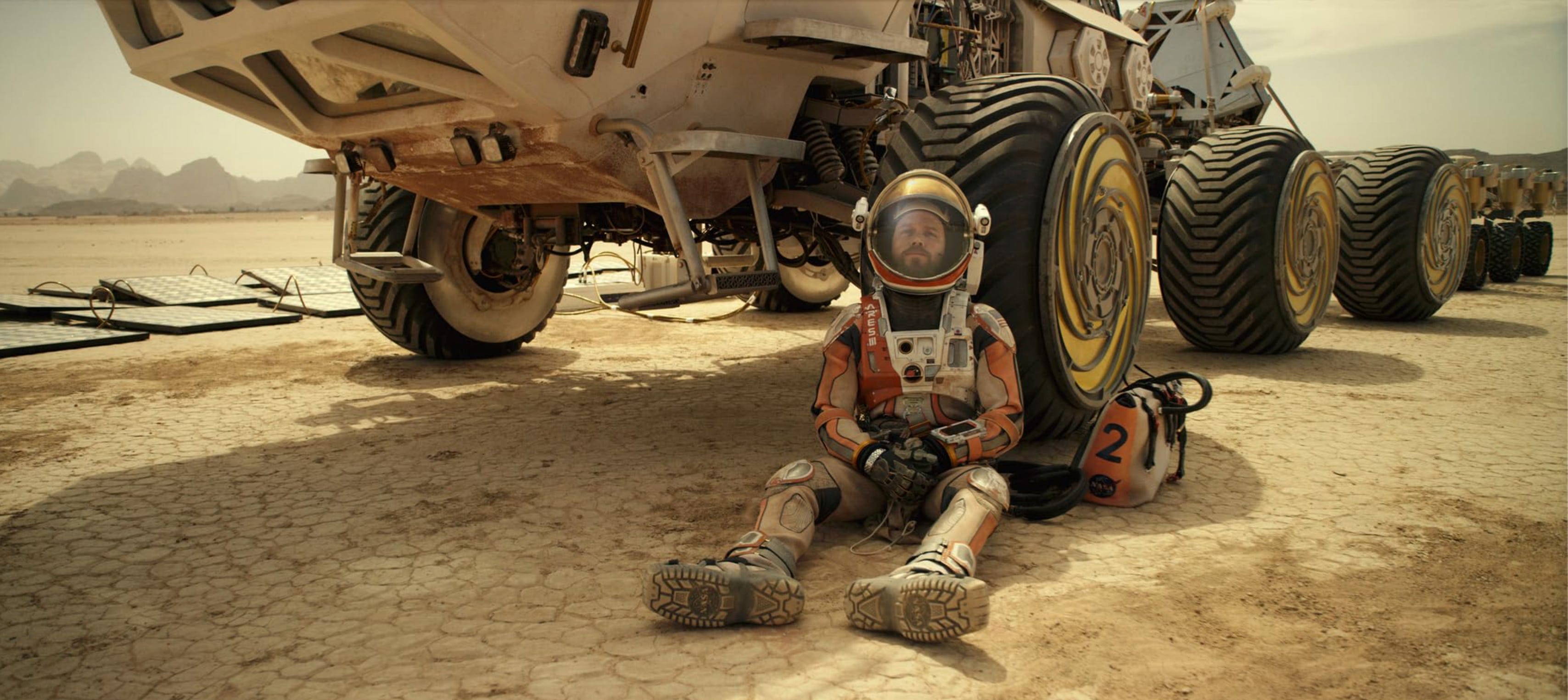
He focuses on his immediate problem and then moves on. His habitat’s integrity, his food supplies, and power systems — the same instinct I had stumbling out of my tent. Except taking refuge in a shipping container doesn’t exist. There is no one to hand him a tent brace. No shared purpose, no beers at the end. Every decision he makes, he makes alone.
I admire how Andy Weir uses science to build the emotional tension in the movie. The math on how many calories he has to survive is real. The chemistry of growing food on Martian soil is real. The orbital mechanics that underpin a rescue have challenging, unforgiving details. Weir does the calculations. And because the science is real, every problem Watney solves feels like a genuine victory. We’re not watching him get lucky. We’re watching him think his way out of dying.
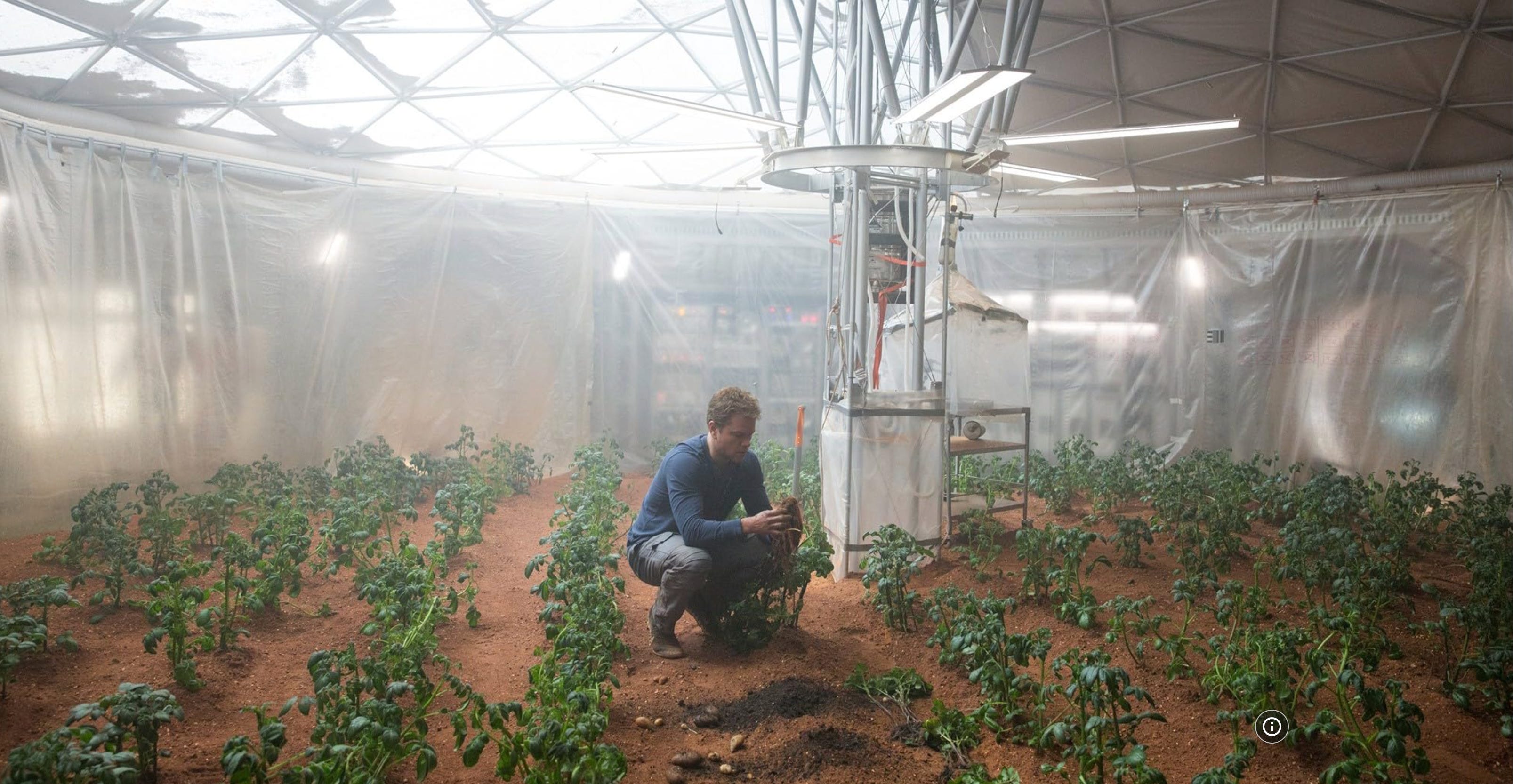
Weir explained his process for writing the Martian in a lecture back in 2018. He would write a chapter, post it online, his audience would critique the science, and he would fix it. He kept working to get it right, chapter after chapter, until he had thought through nearly every consideration.
Weir even wove in real Mars mission history. The Pathfinder lander — an actual NASA mission built by the Jet Propulsion Laboratory (JPL) that touched down on Mars in 1997 — appears in the story as Watney’s method for reestablishing communication with Earth. Pathfinder’s computer was genuinely reprogrammable, meaning a stranded astronaut could, in principle, do exactly what Watney does.
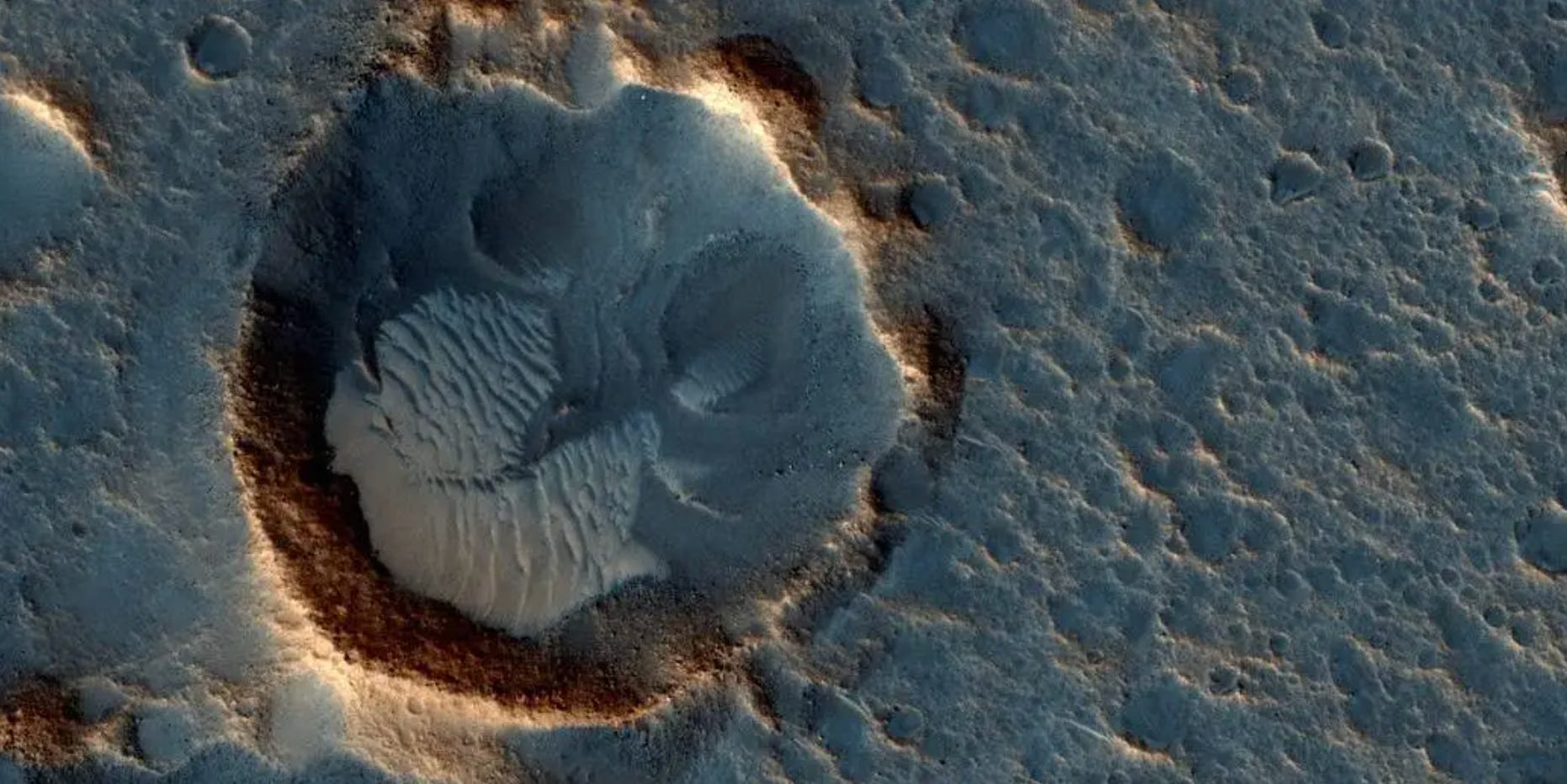
Weir got so many details right that NASA actually trained its Mars Reconnaissance Orbiter on his fictional landing site in Acidalia Planitia. What they found was consistent with a dust bowl — probably not where you'd actually land. But the rigor of his science earned that curiosity. His fiction was so grounded in reality that actual rocket scientists felt compelled to check the homework. That has to be the highest compliment a science fiction writer can receive.
Though Weir is first to admit he has moments where he stretches the science to create drama. The atmospheric pressure on Mars is about 1% that of Earth — a 100 mph wind on Mars exerts roughly the same force as a 10–15 mph breeze on Earth. It's almost impossible a storm would have forced the evacuation the way The Martian depicts in its opening scene.
I can tell you from experience that a storm in a real desert is terrifying enough. Waking up to chaos, not knowing what’s broken or how long it will last. The wind on Mars may be gentler than what hit us at Burning Man — but I had something Watney didn’t. Friends. People to hand me tools, crack jokes, and keep work moving through the night.
All Mark Watney had was his own commitment to “science the shit” out of his situation. Andy Weir is a writer methodical enough to think through: what would a trained astronaut actually do? How would a smart, scared person handle the impossible? That imagination, grounded in real methodology, is what makes Watney’s story feel earned.
Andy Weir’s next adaptation, Project Hail Mary, opens March 20th — and rumor has it he’s done it again, this time with the science of first contact. Subscribe for Part 2.
Sources