

Space Lasers
Satellites are starting to use lasers instead of radio, enabling faster, more secure, and interference-free connections.
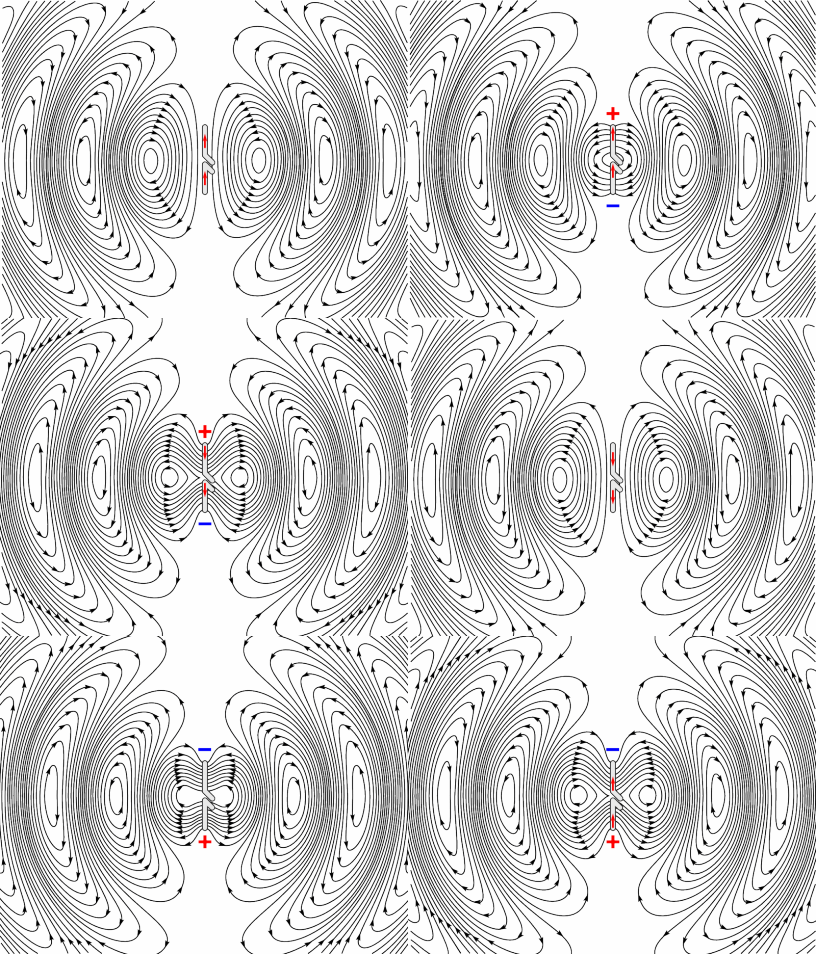
How do we get information from satellites? It’s actually fairly similar to the how your phone connects to your home wifi. Your internet router broadcasts radio waves (at 2.4 or 5GHz) and your phone has the password to connect to the network. Satellites also broadcast radio waves, at a higher frequency, back towards Earth where we use antennas to connect.
Radio waves are low energy, hence the need for antennas, also known as ground stations. Transmissions from satellites are sent at different frequencies depending on the type of data. There’s a reason you don’t pick up satellites on your wifi network. That is changing though with Starlink, which is planning to make wifi accessible wherever you are on the planet.
But now, a shift is underway: satellites are starting to use lasers instead of radio, enabling faster, more secure, and interference-free connections.
The Antennae Rush
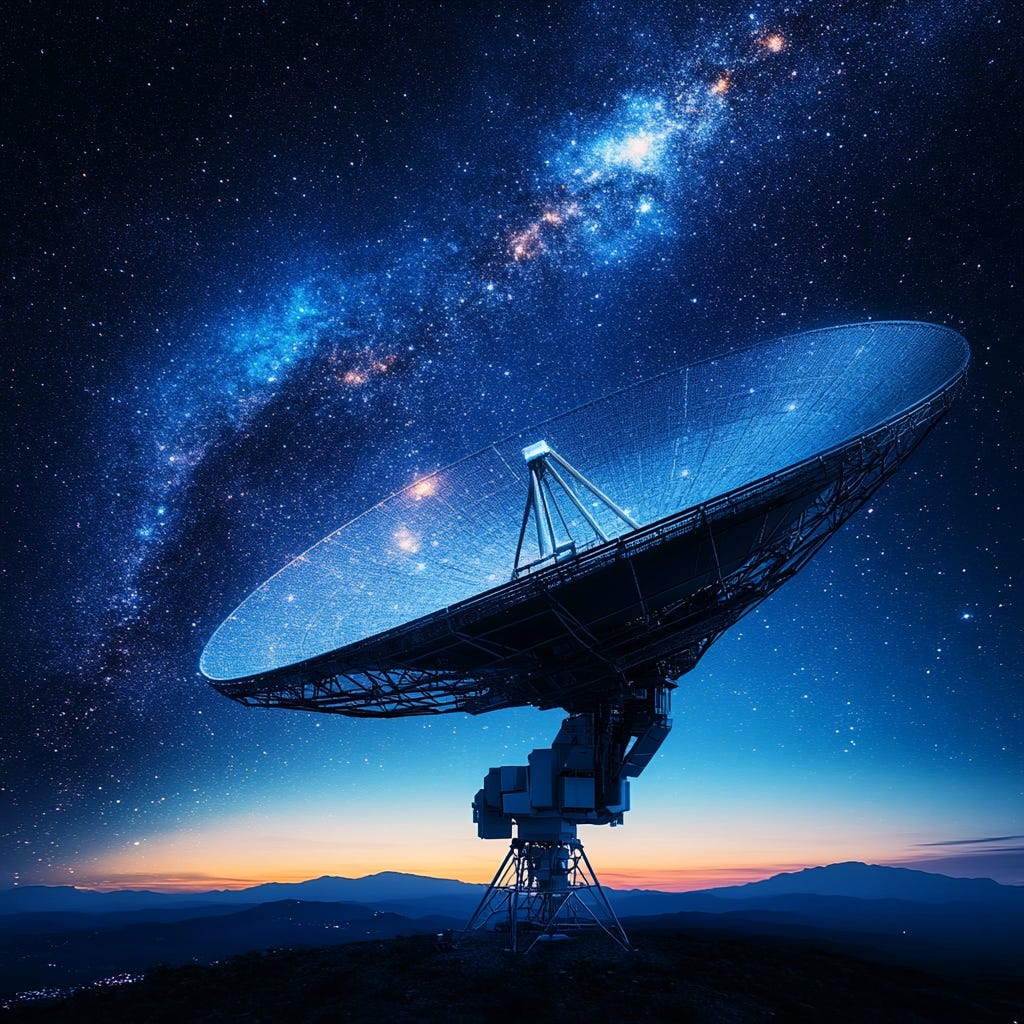
Without ground stations, it would be almost impossible to receive data from satellites. Especially from our deep space missions like Europa Clipper. NASA’s Deep Space Network (DSN) is a collection of ground stations across the globe that looks for radio transmission from active missions.
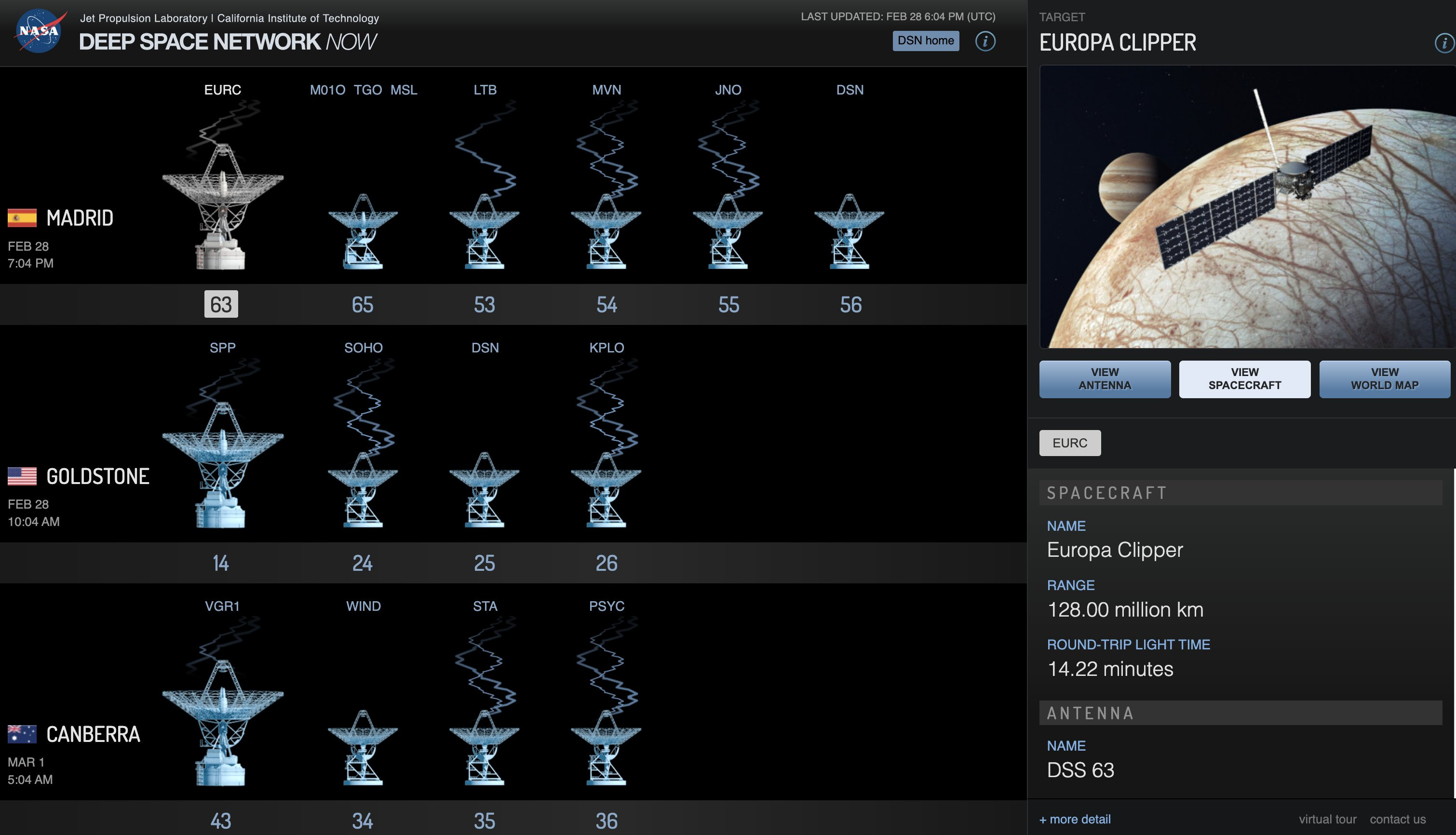
That capability is valuable. DSN has to prioritize the highest value transmission. When Intuitive Machines went to the moon, they were told not to rely upon NASA DSN for communicating with their lander, meaning they had to source their own antennas network with private industry.
This is why companies like Amazon are betting on ‘Ground Station as a Service’ and a host of other companies have emerged to build radio antennas here on earth - Northwood Space is a local LA startup that comes to mind. With more private space companies conducting operations, more bandwidth is needed to communicate with these assets.
Is this a secure line?
Since anyone with an antennae can interpret radio waves, transmissions need to be encrypted. When data isn’t encrypted, anyone can connect, like a wifi network without a password. The US military learned this lesson in 2009 during the SkyGrabber drone mishap which is a top tier underestimation of our enemy. Predator drones were sending unencrypted transmissions because we didn’t think insurgents would be able to read them. They did.
Radio can also be interfered with. Simply overloading with other radio waves makes it hard to know which transmission is the one you are looking for. This has happened in the Ukraine war with GPS. Russia broadcasts fake GPS signals that mimic real satellite signals. This overpowers the real signals making the spoofed signal the dominant source. This isn’t just an issue for the military. New Scientist wrote a good article last year about how commercial planes are affected by GPS spoofing.
Security is paramount. Without encryption there’s no way to secure these transmissions. And without innovation in data transmission, radio waves will always be vulnerable.
Say hello to my little friend
Now let me introduce you to the future: Laser based communications.

The Space Development Agency is helping the Space Force build the Proliferated Space Warfighter Architecture. Essentially this is Starlink for the military but with missile tracking capabilities. Since radio waves have their challenges, the agency is using lasers for satellite to satellite communication in their network.
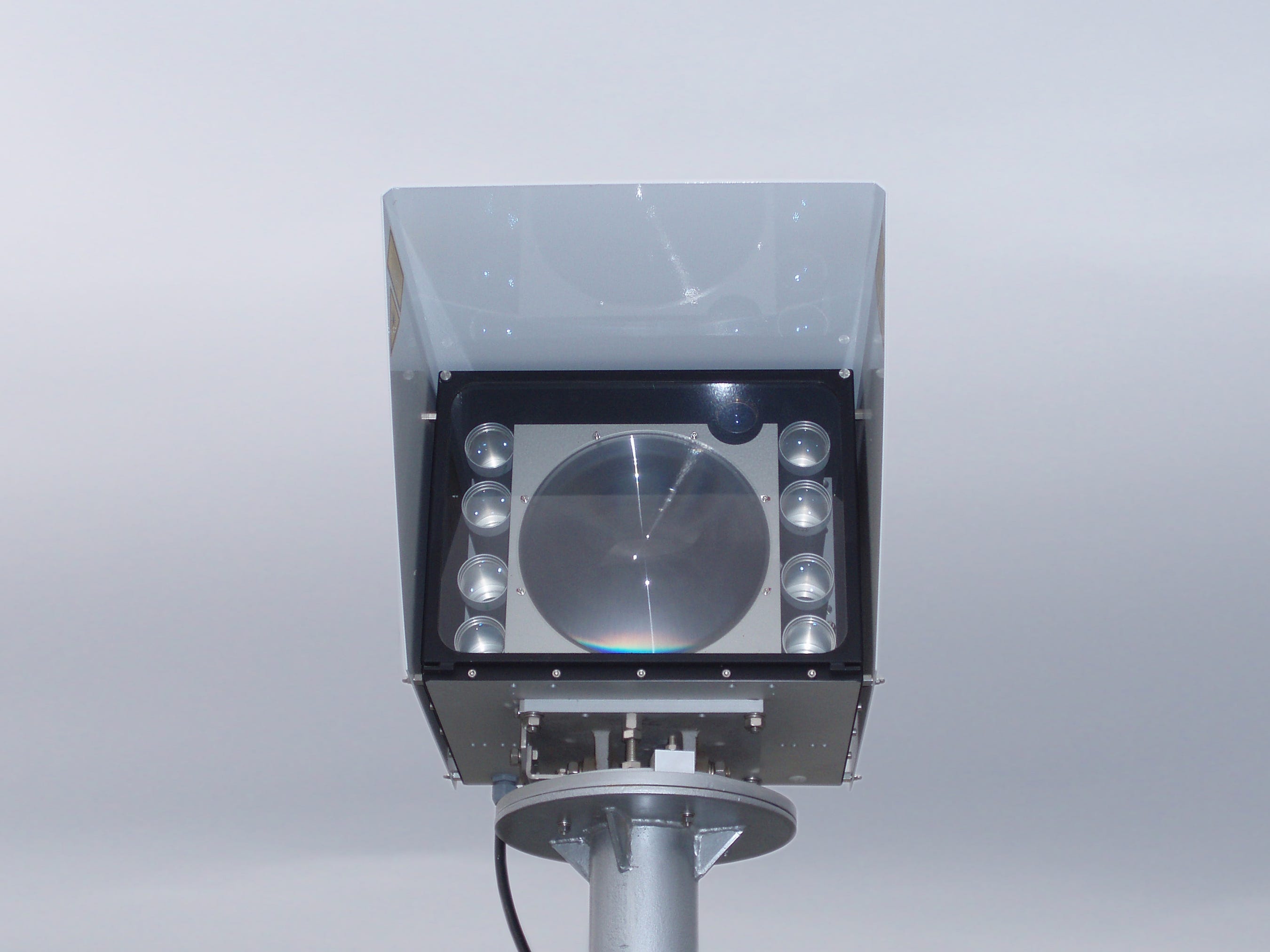
Lasers transmit using high powered and focused light beams. A laser based network can enable bandwidth increases of 10 to 100x. They are much more challenging to interfere with or intercept. And the systems themselves are also smaller than radio frequency systems meaning more space onboard for other instruments.
Deep Space gets closer
NASA knows that future space missions using laser communications will be able to generate and collect more data, allowing for new discoveries about our universe. Think about the James Webb telescope being able to send images back 100x faster than it does now. That’s a lot more photos, science, and opportunities for research.
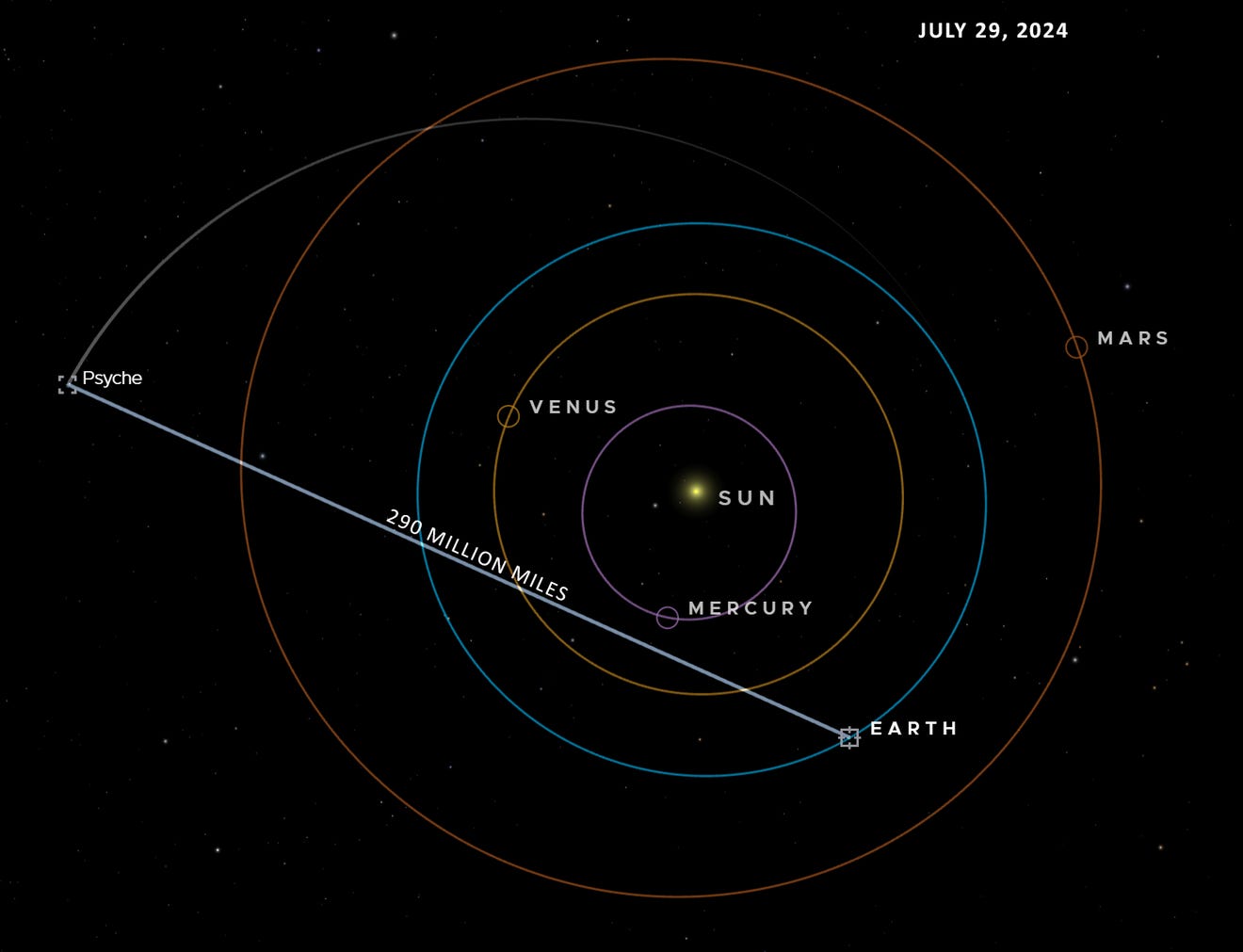
This is already underway—NASA’s Psyche mission is currently en route to study the metal-rich asteroid from which it takes its name. Last summer, when Psyche was about 290 million miles from Earth — more than 2½ times the distance between our planet and the Sun — the project achieved download speeds of 6.25mb/s. While this speed is lower than the experiment’s maximum, it is far higher than what a radio frequency communications system using comparable power can achieve over that distance.
Laser communications do come with other operational challenges including laser alignment, building out optical terminals, cloud interference, and ground stations capable of receiving this data. Laser based transmission along with the proliferation of ground stations will be a fundamental driver of advancements in space connectivity.
Lasers are still early. And more emphasis on them will ultimately allow capabilities we aren’t even aware of yet. I look forward to watching how this technology ends up improving our understanding of space and all our objects up there.
Very interesting. I'm interested in better understanding how they accurately transmit laser signals over such far distances. Given the very narrow area of a laser transmission, I would expect the need for near-exact precision to be a large challenge.
Great writeup! super clear, thank you!