

Orbital Geoengineering
As the planet heats up and natural disasters become more frequent, it's time to explore space-based geoengineering ideas.
Geoengineering has been in the news lately. New Scientist ran a story making the argument that now is the time to take solar radiation management seriously to prevent climate tipping points. SRM aims to reduce global warming by reflecting a small percentage of incoming solar radiation back into space.
In a time when it seems there is a new natural disaster each month, I’m scared of living in a world where we reach a tipping point. It seems Steve Miller Band is already there as they cancelled their upcoming tour because of extreme weather. Which feels like more of a loss for Steve Miller than a gain for the planet but alas.


There was also the Arctic Repair Conference that took place in Cambridge a few weeks ago. That event brought together researchers working to prevent sea ice melt in the Arctic. There are a range of ideas for how to approach that. A few that are on the table: digging sills near glaciers, having tugboats drag parachutes underwater to bring colder water to the surface, and marine cloud brightening which is a type of solar radiation management.
With constant extreme weather events, from the Texas floods to heat waves across America and Europe, now feels like a good time to revisit what our space based geoengineering options are.
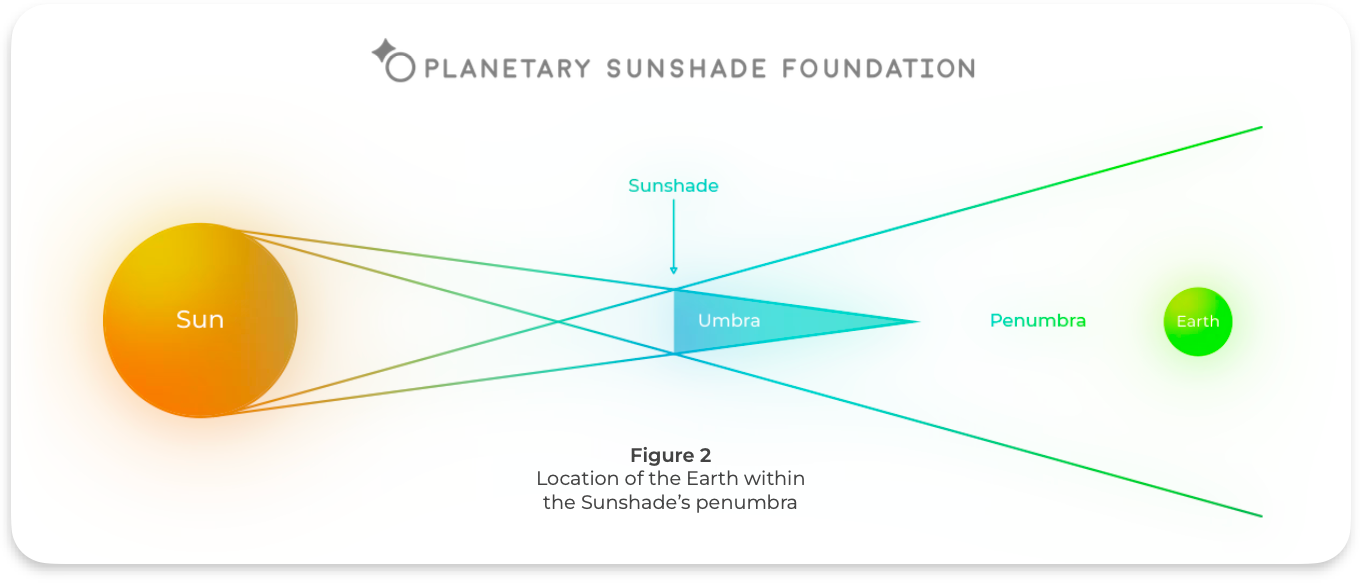
A Planetary Sunshade. Think of this as a giant umbrella at Lagrange Point 1 to protect us from a small percentage of the sun’s radiation. Blocking .5% of the sun’s rays would lead to a 1° cooling of the planet. That type of scale would also require 75m tons of mass to orbit, costing hundreds of trillions.
But that would build an umbrella the size of Alaska! And it could be built over many decades as access to space becomes cheaper. With the moon & asteroids for mining and manufacturing, it could actually start to look like a bargain. Especially if you think that type of shade structure could double as a solar array… it becomes compelling in a hurry.
The Planetary Sunshade Foundation recently received a 400k grant to research reflector approaches. I’m a fan of their leadership team and think they have a grounded approach an ambitious idea. (Disclaimer: I have written some blogs for Sunshade Foundation here.)

Midjourney created image of a planetary sunshade. A sunshade would be located at Lagrange Point 1 so this photo isn’t realistic at all.

Dimming the Sun - This research paper is called Dim Sun which is great work by the research team at the Jet Propulsion Lab here in LA.
The is idea is to dim the sun’s radiation using regolith particles. Regolith essentially just rock from space.
In their approach, we need to round up asteroids, pulverize (their word not mine) them into smaller pieces, and then move those smaller pieces out to Lagrange Point 1. There’s some thought about how the dust cloud would be held in place at L1 but I think we have a ways to go before we can safely move and pulverize rocks in space.
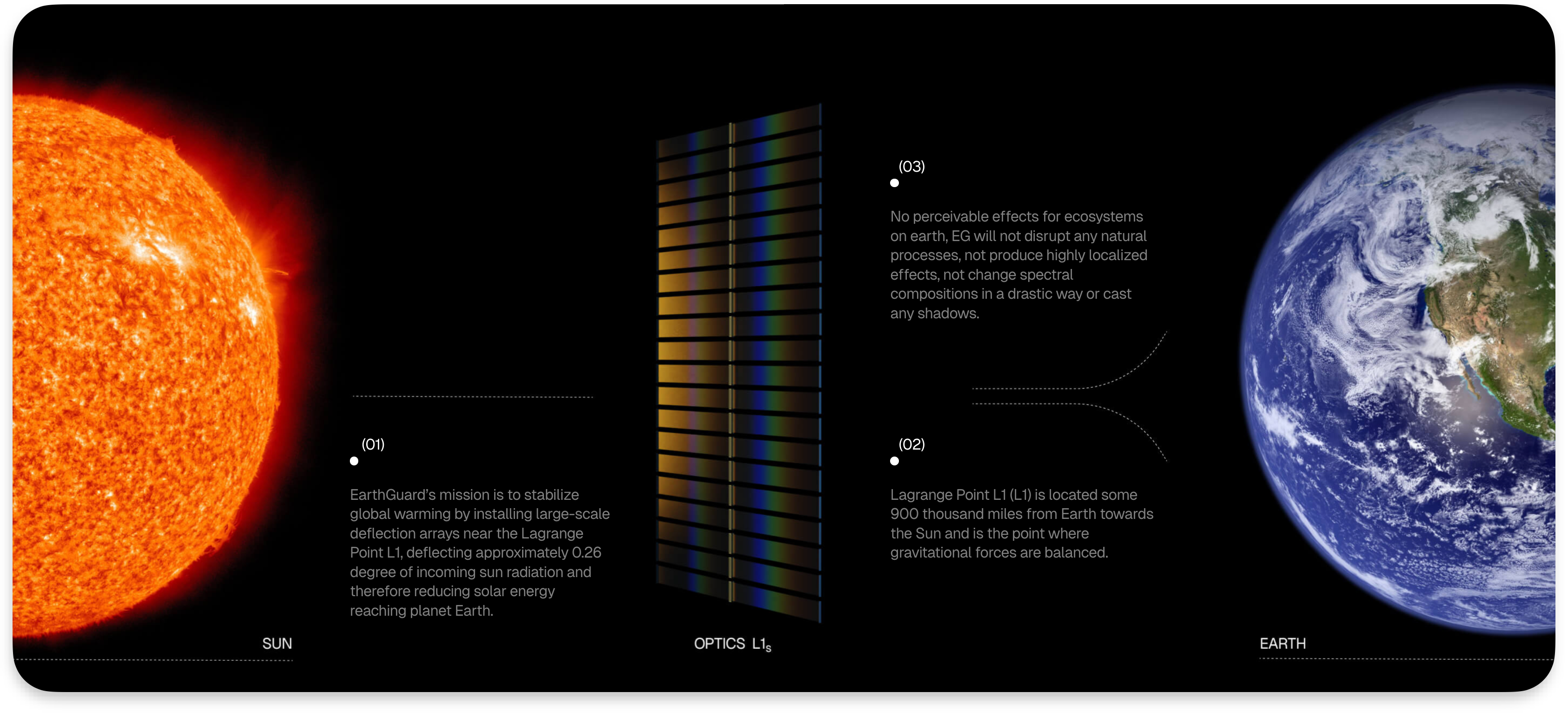
Diffracting light: The one is similar to the first idea of shade except instead of a shade, the idea is to use diffraction and reflection to alter how much of the sun’s energy makes its way to us. Earthguard.space wants to launch 600 different modules that would work in tandem which i think its a cool idea to consider how swarms of satellites can work together on a geoengineering project.
Those concepts are a few of the ideas out there for how we might help the planet through space infrastructure. To me these projects highlight how hard it will be to govern geo-engineering projects. Who says it would be ok to create a rock cloud in space? Probably whoever has the ability to make a rock cloud in space?
They also require technology and infrastructure advancement. And then there’s the idea of “termination shock”, which is if you build one of these types of projects and then it gets compromised, the planet is left without protection and temps go right up.
Geoengineering is going to continue to be a conversation for decades to come as climate issues are impossible to ignore. If you want to learn more I encourage a visit to planetarysunshade.org and sign up for their excellent newsletter which highlights their quest to find the way to make a sunshade happen!