

Newsletter 3
Bioweapons, Asteroids, underwater Electricity, Geopolitics for the End of the World, and Chinese IP Theft.
October 25, 2021
This week’s newsletter starts with a couple quick hitters on blood doping, bioweapons, and asteroid-avoidance. Not all at the same time, but that would’ve been a lot cooler. Then I get excited about new underwater infrastructure (Undersea Cables), and a new book I can’t wait to read (Geopolitics for the End of The World). And I finish with a shout out to fellow China Hawk, Matt Wahl, and yell about Chinese Intellectual Property theft.
Briefs
Lance Armstrong said on The Peter Attia Drive Podcast, that he used to be able to hold 500 watts or higher for 30 minutes when he was using EPO (aka blood doping). It makes me wonder how a less superior human would respond to EPO in their peloton output. Perhaps it’s time to start an #EpoDads movement and see how many regular people we can get excited about exercise through blood doping. I also challenge anyone with access to a peloton or airdyne bike w/ power meter to rip up to 500watts and beyond to see how long you can hang on.
Havana Syndrome remains on my short list of things I want to avoid at all costs. Last week, 5 families connected with the US embassy in Bogota, Colombia came down with Havana Syndrome, a mysterious illness that has affected somewhere around 200 people, most of whom are US diplomats and their families (some Canadians too). The symptoms range from ringing in the ears, to fatigue, dizziness, and other generally uncomfortable things. The first cases were identified at the US embassy in Havana back in 2016, but the cause remains unknown. However, current speculation in the intelligence community says it has something to do with microwaves rays (or a Directed-energy weapon) and the Russians may be behind it. Whatever the case, it seems Havana Syndrome has the potential to be viewed as an early example of biological/technological warfare via use of microwave technology to affect the nervous system of targets. “Directed-energy” weapons are news to me. In a quick scan of the wiki, you see 5 different government agencies that have invested in the technology for different use cases. One outcome, LRAD, short for Long Range Acoustic Device, controversially has been used as a protest deterrence mechanism. Will report back on DEWs sometime in the future.
Asteroid Avoidance
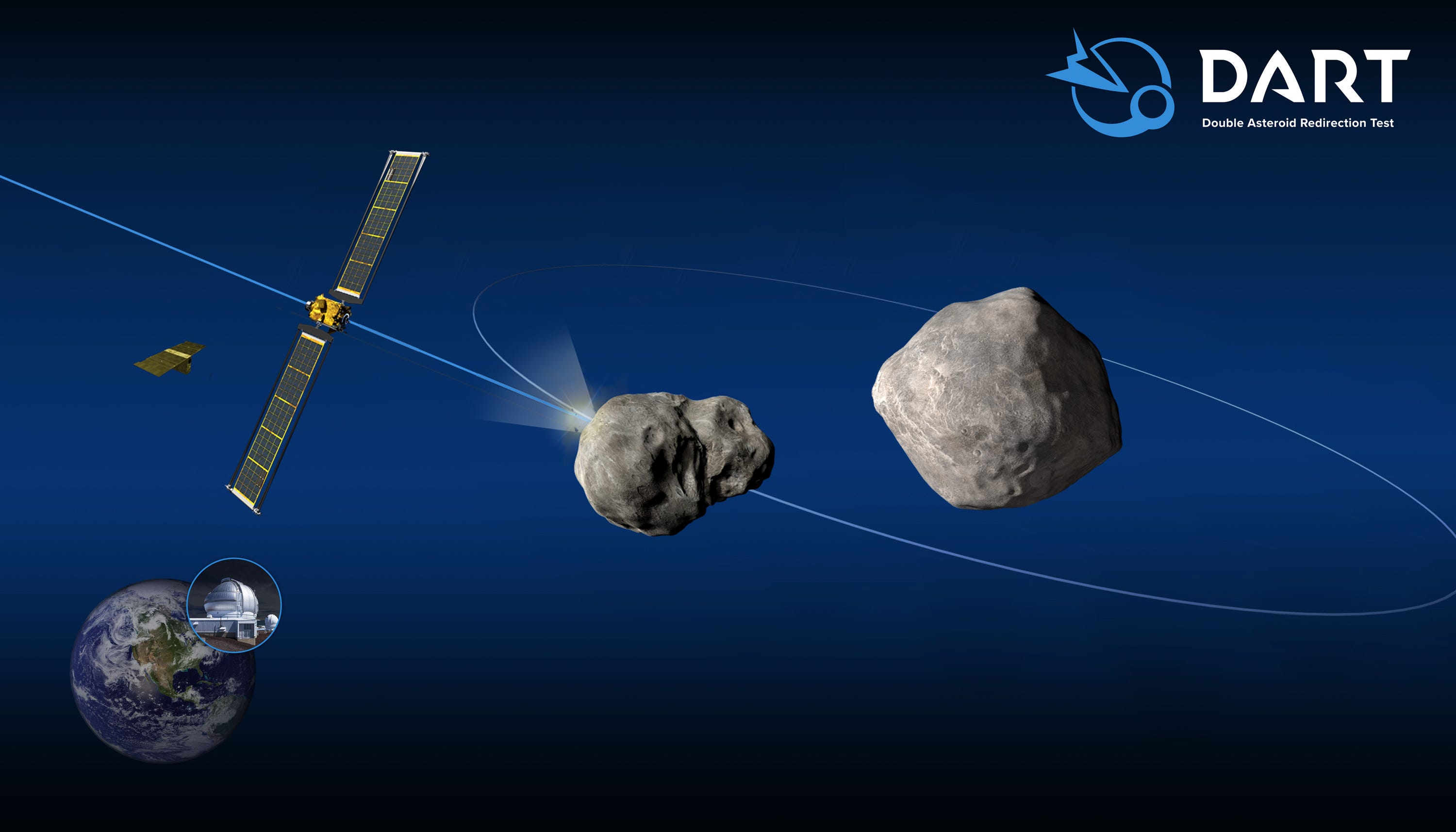
In Newsletter 2 I wrote about satellite collisions and potential consequences. In the same vein of space-disaster-avoidance, NASA has launched a new mission called DART to explore the feasibility of altering an asteroid's path, should one threaten to make us like the dinosaurs. It also seems like a more legitimate plan than the one they use in Armageddon, the 1998 flick in which Bruce Willis and Ben Affleck lead a pack of oil drilling degenerates to space to detonate a nuke on a world threatening asteroid. NASA has something a bit more refined up it’s sleeve in DART or the Double Asteroid Redirection Test. DART’s mission is to crash into Dimorphous, a small-ish asteroid, in order to alter its orbit by about half a millimetre a second, shortening its orbital period by about 10 mins. This initial test could come in handy if NASA’s Near-Earth Object Observation Programme ever locates an asteroid threat that could send us all back to the stone age. The results of DART’s impact will be monitored by an Italian cube satellite for asteroid detection, yet another reason to be excited about all our new capabilities in space.
Environment, Solutions
Undersea Cables
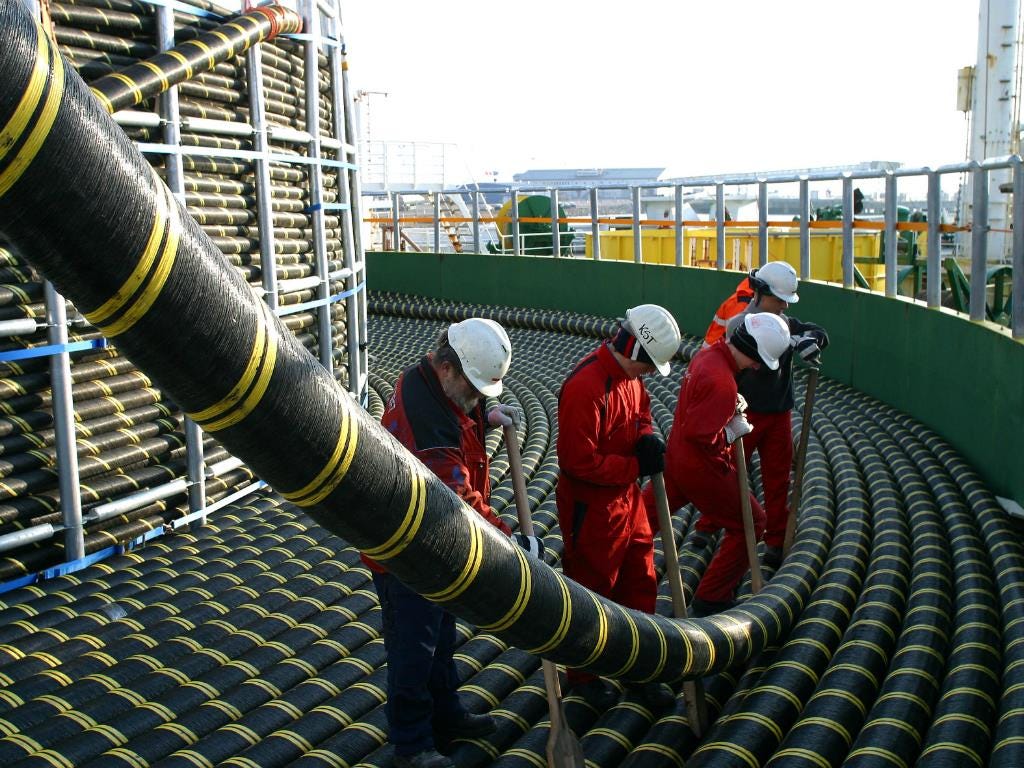
As electricity generation moves more towards renewables, the way we deliver electricity will also need to change. One promising example already in effect are large undersea electric cables, which connect offshore wind projects, and national power grids alike. The idea is that if enough links are made, energy becomes a more tradable commodity between nations. Tasked with decarbonizing, grid operators can easily buy and sell the right contracts, rather than being reliant on building a wind farm or solar in the wrong place.
Take Scandinavia as an example. Denmark has enough wind turbines installed that when it’s windy, they don’t need any other power. However, when the wind isn’t fulfilling demand, they still fall back upon fossil fuel plants. With a cable connecting the Danish grid to Norway, who has hydroelectric capacity, both Countries would be able to share in each other’s energy competitive advantage. When the wind is blowing in the Norwegian Sea, both can use Danish power, and when it isn’t, the Norweigians can increase hydro productivity. It opens the door for countries to partner on large scale renewable projects, and share in the benefits. This could accelerate infrastructure development through the nation's collaboration in our worldwide push to decarbonize the grid.
There are already other examples of ambitious cable projects emerging. Australia, Indonesia, and Singapore are exploring about a cross sea cable that would allow them to be linked. Recently, the UK experienced huge gas price volatility due to less wind resource which required large amounts of gas, which wasn’t available in abundance. A new underwater transmission line between Norway and the UK which just opened should help to alleviate some of these struggles moving forward.
Being able to reduce energy price volatility is essential to decarbonization. If you get a gas bill that is 5x what you are expecting from the previous month, due to inconsistent renewables, you’re probably less likely to be excited about decarbonization. Two public companies that are at the heart of this cable laying future are NKT and Prysmian, up by 48-125% YTD. This is the type of basic infrastructure innovation that isn’t necessarily headline grabbing but should get us all excited. Not only for cheaper energy, but for increased resilience and collaboration between nations. (More from the Economist here)
Book, podcast
Geopolitics for the End of the World
This upcoming book from Bruno Maçães sets out to paint a picture of geopolitics post-covid. He believes Covid was a showcase of the various responses states and ideologies have to international crisis. Authoritarian regimes shut down completely, while the western world struggled to contain the spread. I tend to agree with the idea that covid was a dress rehearsal and a good setting of the table for where countries are at these days.

His book won’t be available in the States until the end of November, so I’ve had to settle for a podcast and a couple book reviews to learn more about Mr. Macas theories of the new world. The New Statesman writes “[Maçães] sees this [moment] as the climax of a Great Pause, a moment of technological stagnation as we accustom ourselves to a new robotic and digital age. Old forms of conflict seem past. In discussing great power rivalry, Maçães never talks of military supremacy or defence spending or nuclear confrontation. Iraq and Afghanistan seem of a former age. So too do Nato, the Soviet Union and the UN, hoary relics of 20th-century politics.” From his podcast with The Realignment, it sounds to him that we are heading deeper into an era of national competition being focused on natural resources.
Specifically competition around minerals and materials used for clean energy and technology (something I was interested in while writing my piece on Lithium production). The Statesmen continues: “The new battlefields are “belt and road” projects, lithium mines, vaccine labs and quarantine pens. Nations still vie with nations, but their generals are technologists and computer hackers.” I’m curious what he writes about how nation's climate change responses will resemble their covid ones.
The most important battlefield in my humble opinion is the economy, which is where all hearts and minds are won. We’ve seen China crackdown on their tech industry (resulting in $1T of lost market cap for Chinese companies), while at the same time crypto continuing to enter the world’s national subconscious and gain legitimacy in the United States. I may be biased but I think crypto should be viewed as an X factor to the monetary system and future economic order. China has made it clear that the boom will not be taking place in China.
Speculating on what the large conflicts of the 21st century will be is a fool’s errand, but worth remembering we’ve seen a world war each of the last 3 centuries. Surely it should be considered as a potential end point of all this resource and economic competition.
China, podcast
Chinese IP Theft
Maçães provides a nice segway into closing thoughts on China. Bruno talks about Beijing’s policy of “dual circulation”, which is the effort to reduce China’s dependency on the world while at the same time increasing the world’s dependency on China. Yet the way they do this is through their commercial sector, rather than their military. China has already weaponized the commercial sector to their advantage. And I’m not sure how the US recalibrates to catch up.
In the 1990s when American technology companies were deciding where to manufacture the booming tech sector, China strategically pumped money into its own capabilities. Irresistible for its cheap labor and new (state funded) manufacturing facilities, China became the “world’s factory” for globalization’s boom. Now with a post-covid shift towards manufacturing self-reliance for many countries, China still retains the acumen and manufacturing ability to grow its technology sector. And that is in part due to the digital prowess of Chinese state sponsored hacking. While American companies built new products and produced them within China’s borders, China forced these companies to share the intellectual property underlying such inventions. And when they couldn’t get it legally, they would just steal it.
The podcast Wireless Wars dives deeper into the details and is worth a listen if you are interested in China’s tactics or how 5G works. The funniest part of the not-so-funny subject is an example of the Chinese telecom giant Huawei allegedly stealing code verbatim from Cisco for a router. This code was then used in a Huawei version of the device that was sold in China, and mysteriously had the same bugs as the Cisco version. The CEO of Huawei was asked why the code was so similar, including engineer comments in English, like “yeah dude this is pretty gnarly right here”. His response - “coincidence” sums up the Chinese stance on the issue. China has no regard for privacy, it’s not a cultural norm there. And that extends to information and data as well. If we don’t prioritize and create as many countermeasures as possible to American intellectual data, we will never be able to outpace China on the economic battlefield. The Chinese government has already shown it’s committed to using state resources to steal things that support industry. The American system has no such collaboration between state/industry to its advantage. Combine that with the willingness to throw bundles of cash (see $75 billion to Huawei), and you have a recipe for taking control of the global economy.
“Secret operations are essential in war; upon them the army relies to make its every move.”
- Sun Tzu