

Argentinian Space Art
Why NASA took a meeting with a sculptor from Buenos Aires
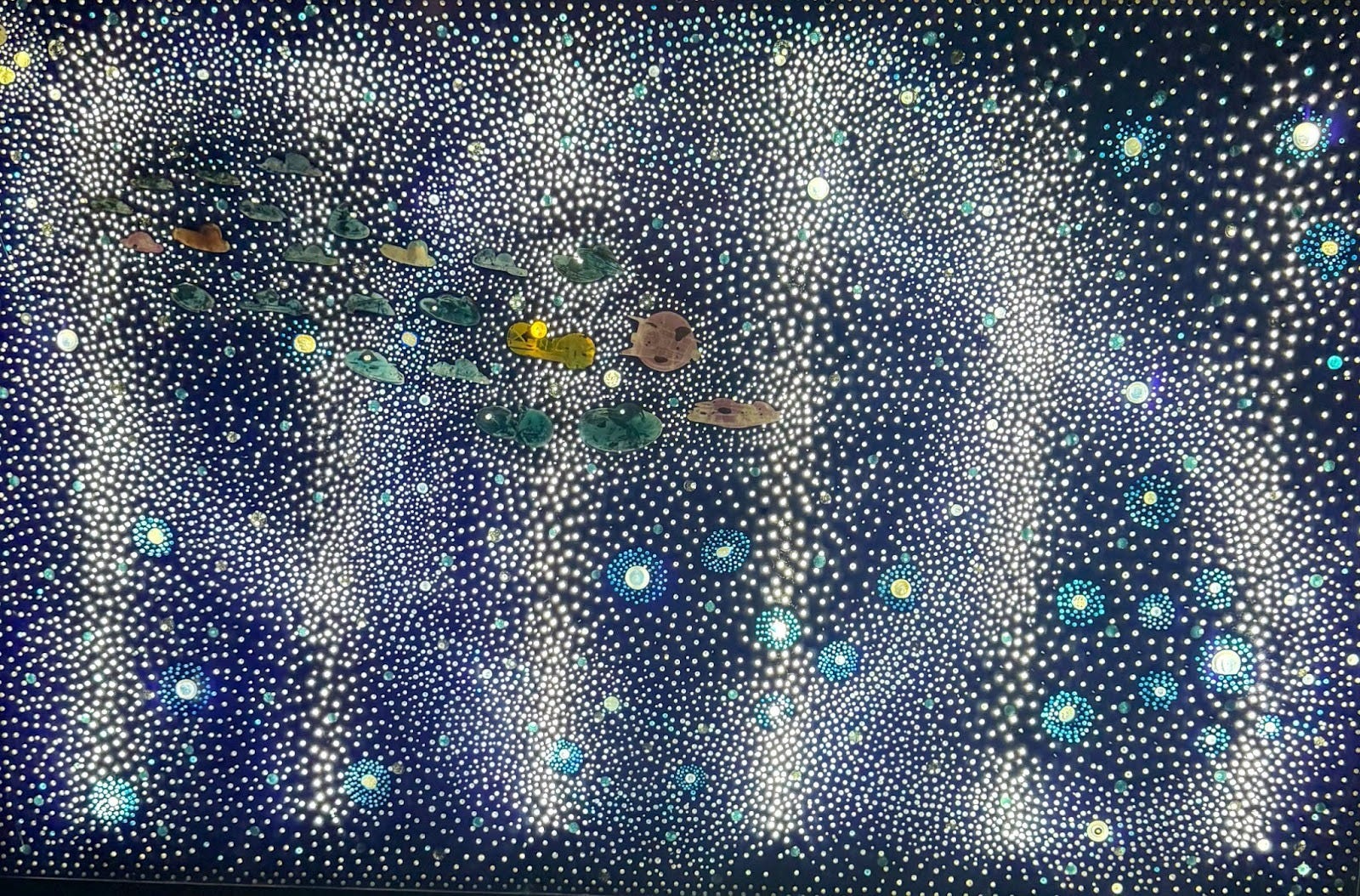
Anytime I see something remotely space related I make it everyone around me’s problem. When I found my way to MALBA in Buenos Aires, I had just spent the last 8 hours speed running Buenos Aires. Space was far from top of mind. I was more concerned with how much Mate is too much Mate.
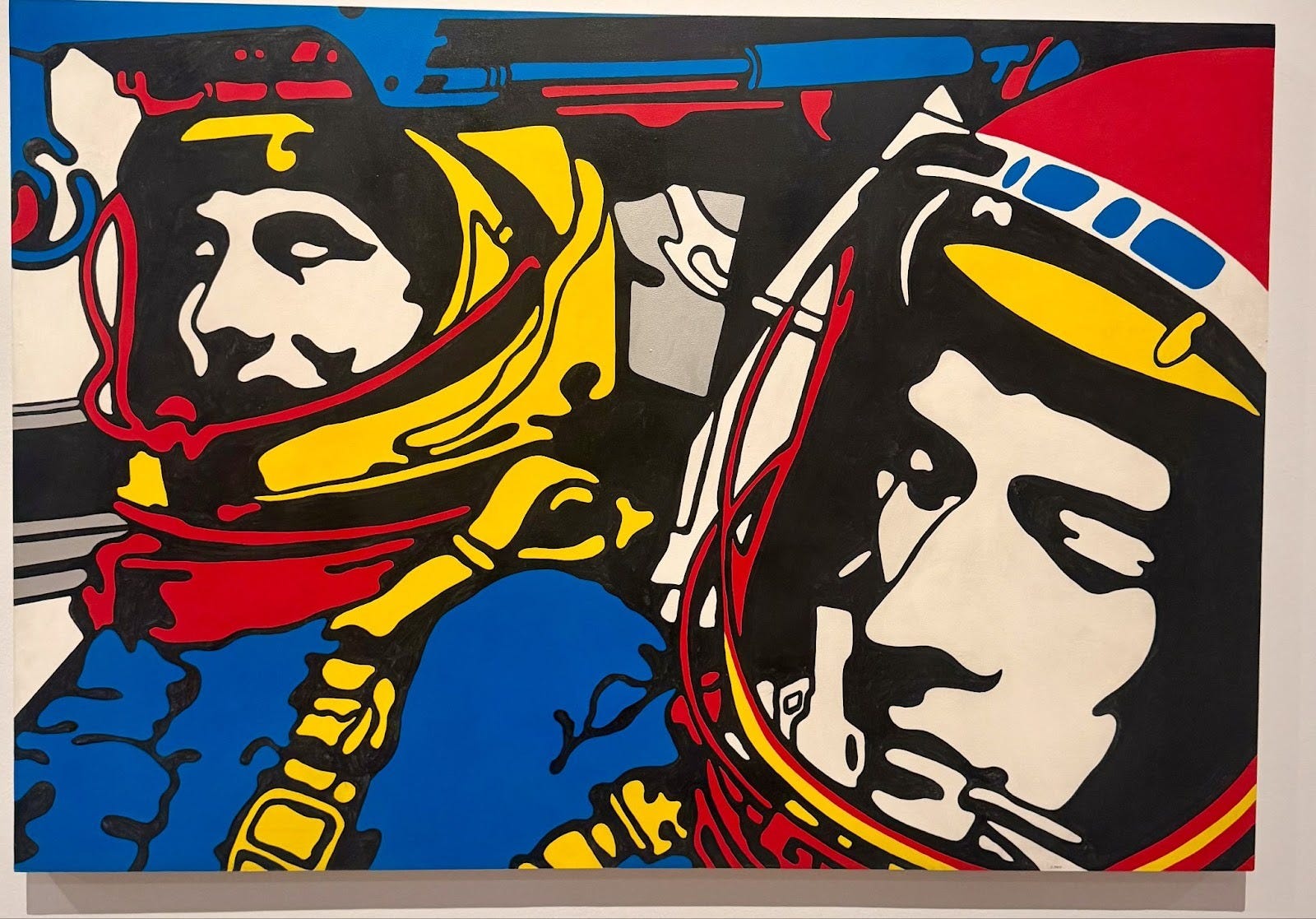
The Museo de Arte Latinoamericano de Buenos Aires (MALBA) brought me back with a few gems of space inspired artwork. Claudio Tozzi’s Warhol-esque pop art centers on astronauts and other popular items from the 1960s. Tozzi, born in Buenos Aires, was inspired by facts and stories from newspapers. At the time, the space race was in full swing and the astronaut iconography can be seen through out his early works.
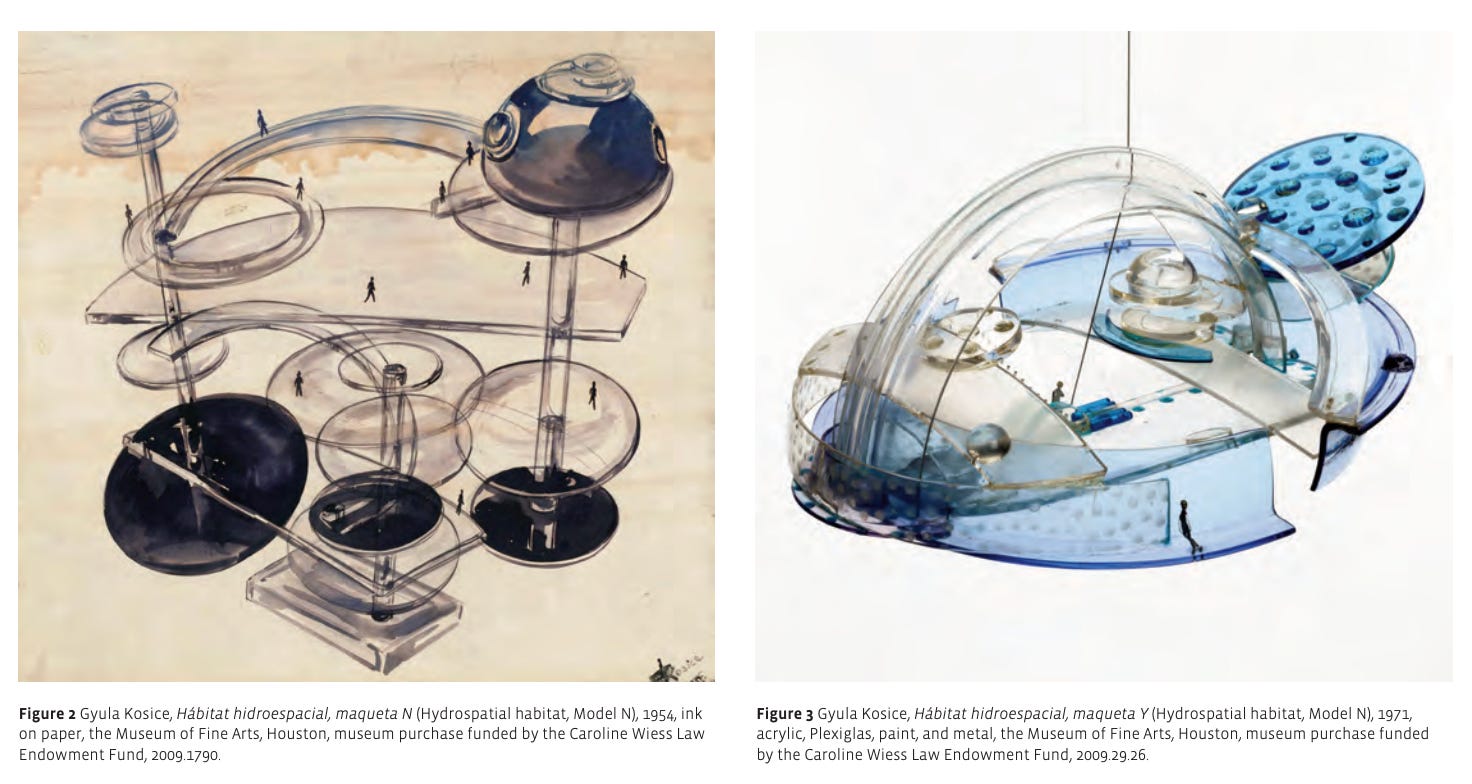
Then I found Gyula Kosice, an Argentinian sculptor who invented ways of shaping and using plastics. Kosice was obsessed with the idea that humanity was destroying the planet and thought mankind would not end on earth - “El Hombre no ha de terminar en la tierra” as he wrote. In a 1944 essay he claimed Western architecture created class divisions, socioeconomic inequality, and environmental degradation. All of which is compounded by population growth.
He proposed an alternative; a city of semi-open, modular habitats suspended 5000 feet above the ground and powered by oxygen and hydrogen harnessed from water vapor in the clouds. Convinced that hydrogen fusion could provide the energy necessary to launch his city into space, Kosice approached NASA and various astrophysicists about the project’s feasibility, which they deemed theoretically possible but too expensive and challenging to produce.
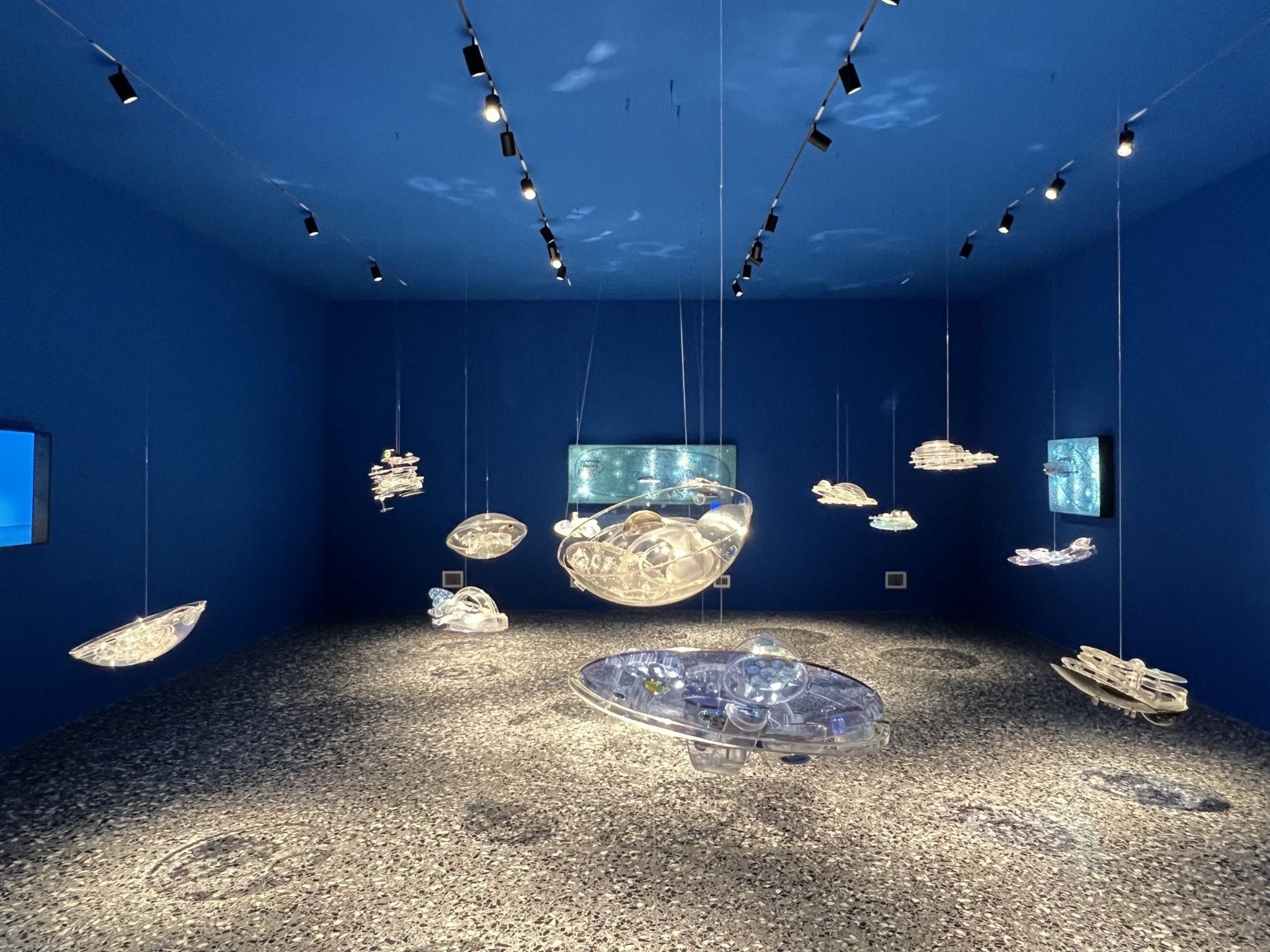
Kosice’s The Hydrospatial City, conceived between 1946 and 1972, shows off his vision of the future. Eleven light installations form a collection of habitats - cities in the sky capable of connecting with one another anywhere around the world. He imagined this as a response to an environmentally degraded and overpopulated earth. The first large-scale U.S. exhibition dedicated to Kosice is on display in Houston until February before it moves to Miami in 2026.
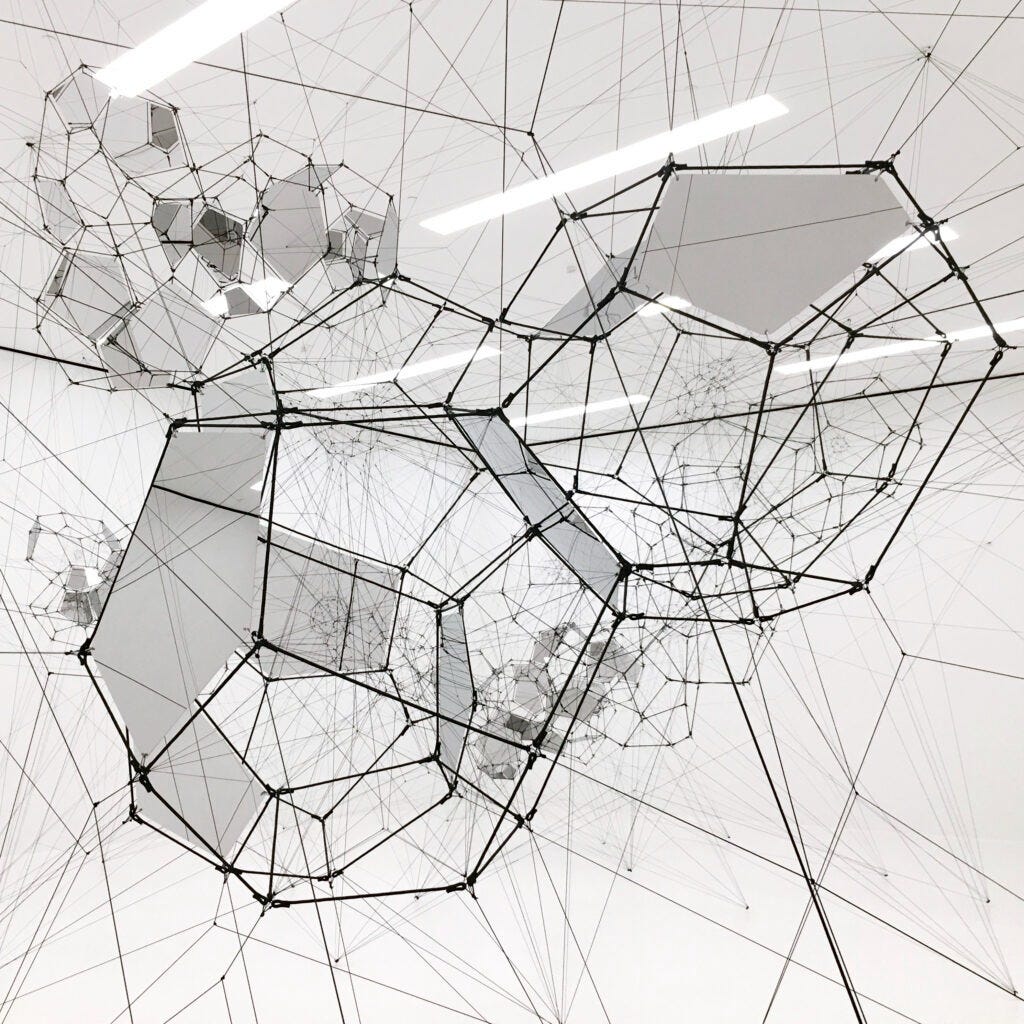
Kosice inspired another Argentinian artist, Tomas Saraceno, who dreamed of a world free of fossil fuels. His floating “Cloud Cities” like the one below pay tribute to the ideas Kosice started. “Cloud Cities” was displayed in the San Francisco MOMA when I lived there back in 2016. I had no idea of the connections between these artists and the visions they shared of our futures.
As one interested in what the future may look like both in space and here on earth, these Argentinian artists remind me of the lasting influence art has in shaping our ideas of the future. And that even if you’re an artist bending plastic in Argentina you can get a meeting with NASA.
What a cool insight. Great find!